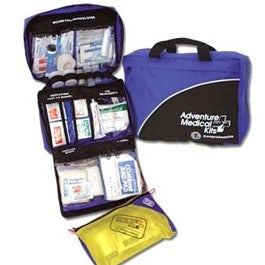
Best Glide ASE is proud to offer articles like this one to our customers in an effort to educate the public regarding survival equipment, survival gear and survival education, that will hopefully save lives. Visit us at
www.bestglide.com for more articles and our full line of survival equipment, survival gear and survival kits.
Many people are reluctant to
consider the potential that they or a loved may
suffer an injury or need emergency medical supplies.
While understandable - many people hate to focus on
the negative - a lack of planning in this area may
have serious and potentially even fatal results.
Simply purchasing a basic first aid kit designed for
normal household use will pose a risk of not having
certain crucial supplies handy if one wishes to have
supplies for an incident involving more severe trauma or an emergency situation. A fully stocked kit can be purchased or
assembled and kept on board private aircraft,
watercraft, vehicles, or used in remote areas where
emergency medical response may be slow or even non
existent. These same supplies may also be useful in
a home setting should a situation (such as a
disaster) take place which reduces the availability
of emergency medical services.
In this article, I will
attempt to present some ideas as to what one may
want in an emergency medical kit, as well as some cautions
regarding the use of items sometimes found in such
kits. Before going any further, I would like to
offer a basic caution. Equipment can not in and of
itself substitute for knowledge and experience. It
is highly recommended that an individual avail
themselves of basic first aid or EMT courses such as
those available from the American Red Cross, various
Community Colleges, and other sources in ones
community. If at all possible, one should also avail
themselves of emergency medical assistance at the
earliest opportunity when an emergency arises. This
advice is also meant to be an overview and is not
intended to take the place of a proper and extensive
first aid manual.
Before embarking on any
extended outdoors adventure or traveling to a new
area, it is always a good idea to consult with a
family doctor and dentist in order to get a check up
before leaving. Nothing ruins a dream vacation in an
exotic destination quite so quickly as finding out
that there was an otherwise treatable dental problem,
such as a cracked tooth, only to find that the island
paradise one is visiting doesn’t have a dentist.
Consult the
CDC and
State Department’s web sites
regarding conditions in a destination country if
traveling overseas. These will contain information on
any vaccinations that are suggested or diseases that
might be prevalent in a given area. Make
arrangements with your health care provider well in
advance for these medications, as some have to be
taken a certain time in advance of a trip. Some of
the common vaccinations needed are those for
hepatitis, tetanus, typhoid, yellow fever, MMR
(measles, mumps, rubella), polio, meningitis,
Japanese encephalitis, and good old flu shots. One
should also investigate whether anti-malarial
medications will be necessary if traveling to a
given area.
Your family health care
provider will have access to your medical history
and should have a good idea of your overall health.
Discuss with your health care provider any
pre-existing conditions which may be affected by these drugs/vaccines. Also ensure
that you have an adequate supply of any medications
that you need on hand for maintenance of
pre-existing conditions at any given time. This
means taking a supply of needed medications along
even on day trips. A sudden burst of inclement
weather can turn a day hike into an overnight stay,
which would be a bad time to have left critical
medications behind at the hotel. Remember the
“Gilligan’s Island Rule” - sometimes a three hour
trip becomes an adventure!
I suggest starting a kit by
either adding - or ensuring that there is already in
place - personal hygiene and protection equipment.
These are items designed to minimize contact with
bodily fluids and pathogens as well as environmental
problems. Items to look at including would be things
like a bar of soap. If reptiles are common in an
area, then consider iodine soap as this does a good
job of killing salmonella. It is often used by
owners of pet reptiles and at pet stores for just
this reason. (In an emergency situation, lizard
might also be on the menu.) Waterless hand sanitizer
is also always a good idea. It can be used as a fire
starter if an alcohol based version is used. This is
also useful in relatively mundane situations such as
cleaning one’s hands after relieving one’s self
outdoors without depleting the potable water on hand.
Nitrile gloves are another useful item to have on
hand. Remember - some people are allergic to latex.
Nitrile gloves can also be of use when cleaning
game, handling water purification chemicals,
cleaning a firearm, and other basic camp chores.
Other items to consider
include a disposable plastic apron. This can be used
as a barrier from bodily fluids either in case of a
severe injury or if one has to prepare and clean
large game in a survival situation. Wearing the
insides of a deer on your clothes won’t be a
pleasant experience and also attract scavengers or
even bears. A biohazard bag is also useful to
properly dispose of and mark any used supplies that
have been exposed to bodily fluids. Consider adding a
CPR face shield and N95 masks. The CPR face shield
can protect one from exposure to bodily fluids
during a recitation attempt. The N95 masks
offer at least some protection from inhaled particles
to include dust.
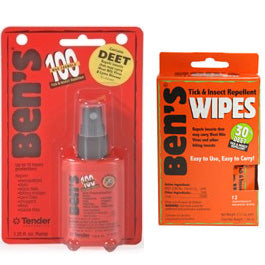
Don’t forget to protect
yourself from the elements. Chap stick or lip balm,
sunscreen, insect repellant, and even a
mosquito net
can all make life much more bearable in an
emergency. A
Heatsheets or other “Space” type
blanket can also be a nice inclusion in a kit in order
to offer some protection from the elements or assist
in treating casualties caused by cold weather.
Consider including either sterile
water or saline solution in a kit. These are useful
for wound irrigation and cleaning. In a pinch,
Coast
Guard approved water ration packets work well for
this. If one has the proper training, a wound
irrigation syringe and a suture kit are also good
ideas. With less training, butterfly sutures can
still be used for wound closure.
Open fires and cooking with
flame are both common in a wilderness setting or
emergency. This can result in burns. Consider
including a Water Gel Burn kit and/or other burn
creams and relief products. To cure burning
sensations of another sort - don’t forget to carry
sting relief medications and topical treatments for
poison ivy.
Most often found in home
kits, but potentially of use in a wilderness kit,
are syrup of Ipecac and activated charcoal. These
are usually found in homes with children as they are used to
treat accidental poisonings. Ideally, these are used
in conjunction with advice from your local poison
control center. In brief, the syrup of Ipecac forces
one to expel the contents of their stomach whereas
activated charcoal absorbs it. These might be useful
additions to the medical supplies of - for example -
a hunting guide, for use in situations such as a
client eating the wrong type of berries.
Imodium and other anti
diarrhea medicines are often found in first aid
kits. These should be used with caution. While
diarrhea can be quite inconvenient, it is serious
only when adequate fluids are not available. If
adequate potable water is available, there are times
when loose bowels are simply the body’s way of
excreting a poison or toxin. Eating strange foods or
simple stress can cause a person to have loose
stools. While Immodium and similar medicines
certainly have a place in a first aid kit, one
should use caution and common sense in utilizing
them.
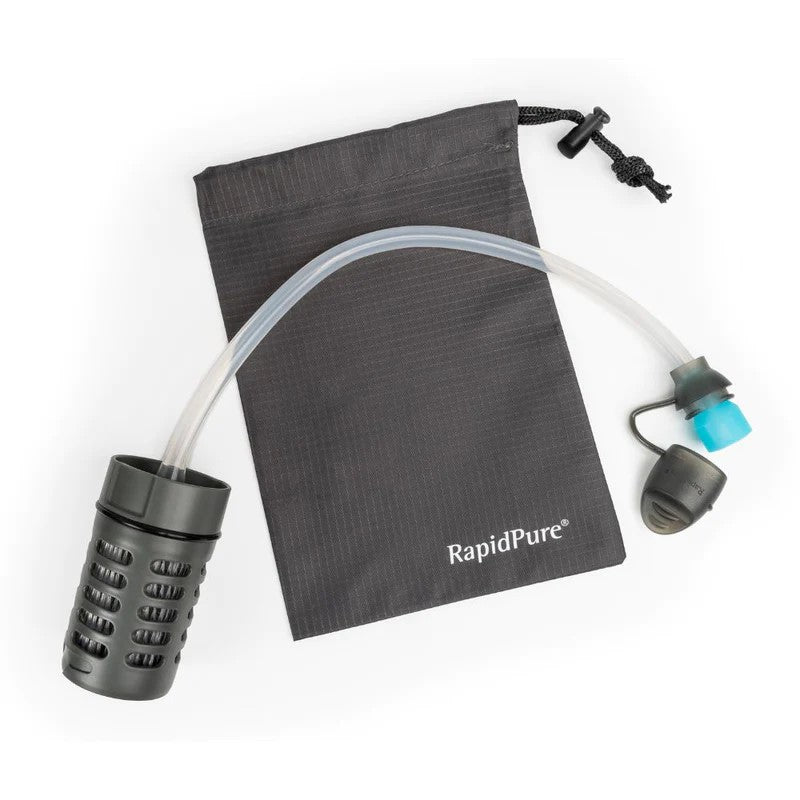
Not often found in first aid
kits, but a useful addition, would be a supply of
water purification tablets. Those offered by
Katadyn
come in handy single use foil packets. They will not
take up much room in a kit and their addition will
help guarantee a supply of potable liquids for
rehydration. I also suggest including a
collapsible
water container such as a Platypus bag somewhere in
one’s emergency supplies in order to have a
container to purify water in.
Glucose tablets or packets
are another item sometimes found in first aid kits
that ought to be used with caution. While these can
be useful, there are also risks associated with
their use in conjunction with certain medical
conditions. If someone is diabetic and is planning a
trip, they should consult with their doctor for an
opinion regarding the use of glucose tablets.
Other concerns regarding
common first aid kit medications - aspirin can be of
use as a mild pain killer and in cases of heart
attacks. However it can cause stomach problems for
some users, and it can affect blood clotting.
Ibuprofen, meanwhile can reduce swelling, but can
cause problems for those with ulcers. Tylenol (or a
generic substitute) may be the best in terms of
causing the fewest undesirable side effects.
I have doubts regarding the efficiency of Hydrogen peroxide. I prefer sterile water and
alcohol for wound cleaning and disinfection. Povidone
iodine solution can also be of use, but while some
manuals suggest using it to purify water, my
understanding is that it’s utility for such has not
been fully proven. There are certainly better water
purification methods available including
water
purification tablets. Benadryl is worth including in
case of allergic reactions, but remember that it
tends to make many individuals drowsy. Antacids are
a simple item that will be used more often than one
expects, as the camp chili might not agree with
everyone.
In terms of
trauma supplies,
I like to see something beyond a basic assortment of
band aids. As mentioned earlier, butterfly sutures
are a good place to start. Also worthy of inclusion
are Ace bandages, Kerlex, and
Israeli type military
trauma bandages. In conjunction, these articles can
be life savers in case of a traumatic injury. A
tourniquet can be useful if one has the training to
use it appropriately and understands the limitations
of one.
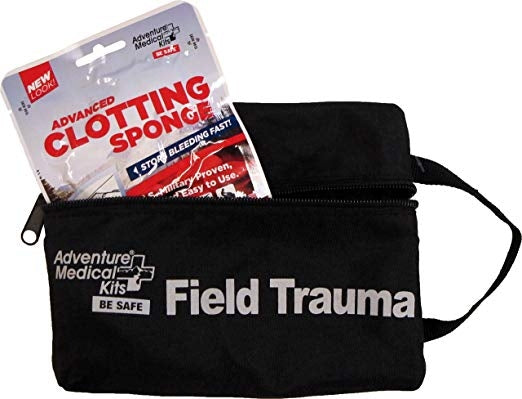
Quick Clot (or a similar clotting agent) is
another potential life saver that one should seek
training in the use of before relying on. It is
great to have in a kit, but seek the proper
knowledge as to what it can and cannot do. Medical
tape and smaller trauma pads should also either be
added or already in the kit.
For longer trips, or those
involving a lot of physical activity, it might be
worth including a SAM splint for an arm, cold packs,
and finger splints. If one is assembling a smaller
kit, then popsicle sticks and medical tape can be
used to splint fingers with the proper training.
Finally, don’t omit foot
care. Some Gold Bond medicated power, a change of
socks, and some mole skins can provide a great deal
of relief and help - literally - to keep one on their
feet.